The Bank has committed £50m to acquire a minority stake and help fund the construction of the Devilla Battery Energy Storage System from Copenhagen Infrastructure Partners (CIP)
The project aims to ease electricity grid constraints and ensure more of Scotland’s renewable energy can enter the power mix
Nuclear Liabilities Fund (NLF) has also acquired a stake in the Fife-based project
As Scotland continues to generate greater amounts of clean energy, the electricity grid can struggle to manage and distribute it to other parts of the UK. This can result in curtailment, where wind and solar producers need to switch off or dial back their electricity generation to avoid overloading the grid.
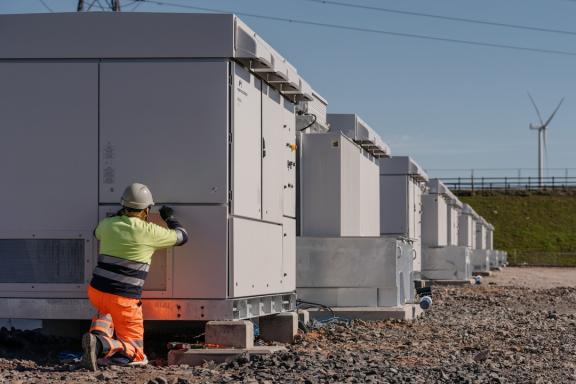
There are also problems with renewable energy intermittency when the wind isn’t blowing or the sun isn’t shining. Battery energy storage systems (BESS) act as buffers, storing excess energy to avoid curtailment, then releasing it later as needed.
Largest storage system in Europe
The Devilla project is a 500MW, 2-hour duration, lithium-ion battery energy storage system (BESS) located near Kincardine, one of three battery storage projects in Scotland being co-developed by Copenhagen Infrastructure Partners (CIP) and London-based energy storage developer Alcemi. Devilla is expected to be operational in early 2028 and will be among the largest battery storage systems of its kind in Europe.
The project has a high level of contracted revenues through a 10-year optimisation agreement with SSE plc, alongside a 15-year capacity market agreement, providing visibility and a stable foundation for returns while maintaining exposure to market upside.
Nischal Agarwal, Partner at CIP, said: “As CIP’s development and construction portfolio of UK BESS projects continues to progress and grow, we look forward to welcoming the Scottish National Investment Bank and Nuclear Liabilities Fund as new equity partners on our Devilla site. Once commissioned in 2028, Devilla will be one of Europe’s biggest operational BESS projects. The delivery of Devilla, alongside CIP’s Coalburn 1 and 2 projects, will improve the UK’s energy security and reduce costs for British consumers through enhanced system flexibility and access to more low-cost renewables.”
Robin Tayal, Investment Director at the Scottish National Investment Bank, said: “Battery energy storage systems are a critical part of improving energy security and stability. The Devilla site is strategically located and will support renewable integration, grid stability, and system flexibility. We are pleased to partner with CIP and the wider investor group to support the delivery of this important asset.”
Melissa Hope, Chief Executive of Nuclear Liabilities Fund, added: “NLF is pleased to partner with CIP and the Bank on this battery storage project. This investment aligns with our strategic investment objectives while supporting UK energy security and economic growth.”
The Bank’s investment in Devilla marks its second partnership with CIP, following its joint investment of up to £50m into the Pentland Floating Offshore Windfarm, alongside the National Wealth Fund and GB Energy. This project was awarded a contract for difference in the AR7 offshore wind auction round.